
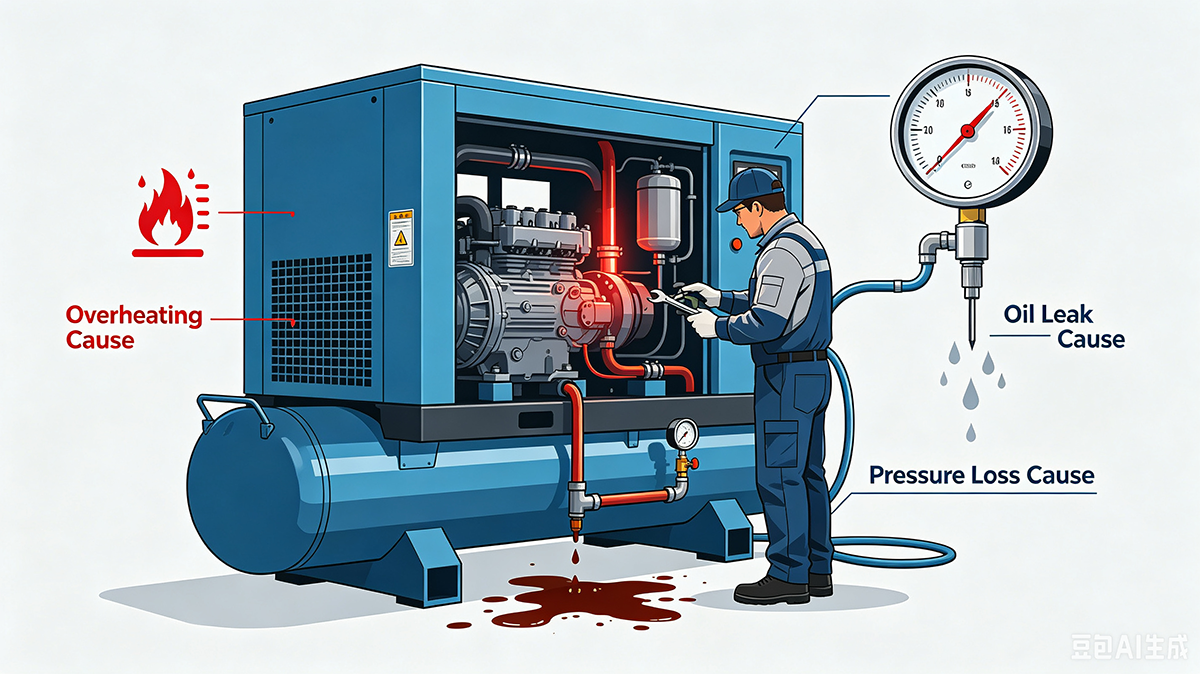
 Screw air compressors are widely recognized for their efficiency and reliability in various industrial applications. However, like any mechanical system, they can encounter issues that affect their performance, such as overheating, oil leaks, and loss of pressure. Understanding the reasons behind these problems is crucial for maintaining optimal operation and extending the lifespan of the equipment.
Overheating is a common issue with screw air compressors, often caused by inadequate cooling or excessive load. When the compressor operates beyond its designed capacity, it generates more heat than the cooling system can dissipate. Additionally, a dirty or blocked air intake filter can restrict airflow, leading to overheating. Regular maintenance, including cleaning filters and ensuring proper ventilation, can help mitigate this problem.
Oil leaks are another concern for screw air compressors. These leaks can occur due to worn seals, damaged gaskets, or improper installation. Oil is essential for lubricating the moving parts within the compressor, and a leak can lead to insufficient lubrication, resulting in increased wear and tear. Regular inspections and timely replacement of worn components are vital to prevent oil leaks and maintain the compressor’s efficiency.
Loss of pressure can be attributed to several factors, including leaks in the air distribution system, malfunctioning pressure regulators, or issues with the compressor itself. A small leak in the piping can significantly reduce the system’s overall pressure, affecting the performance of pneumatic tools and equipment. Conducting routine checks for leaks and ensuring that all components are functioning correctly can help maintain consistent pressure levels.
In conclusion, while screw air compressors are robust and efficient, they are not immune to issues like overheating, oil leaks, and loss of pressure. Regular maintenance and prompt attention to any signs of trouble can ensure these compressors operate.