
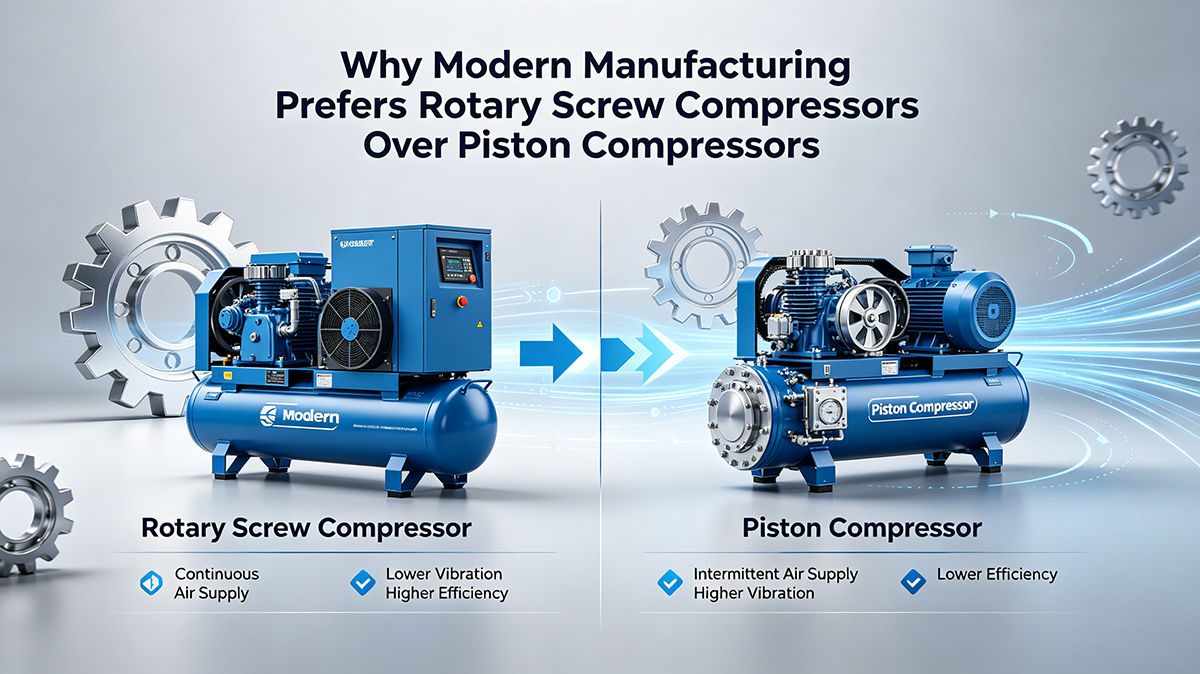
In the realm of modern manufacturing, the choice of air compression technology plays a pivotal role in operational efficiency and productivity. Among the various options available, rotary screw compressors have gained significant traction over traditional piston compressors. This preference can be attributed to several key factors that align with the demands of contemporary industrial processes.
Firstly, rotary screw compressors are renowned for their continuous operation capabilities. Unlike piston compressors, which operate in cycles, rotary screw compressors provide a steady flow of compressed air. This is particularly advantageous in manufacturing environments where consistent air supply is crucial for processes such as pneumatic tools, assembly lines, and automated machinery. The uninterrupted airflow not only enhances productivity but also reduces the risk of downtime associated with air supply fluctuations.
Moreover, rotary screw compressors are generally more energy-efficient than their piston counterparts. They are designed to operate at lower RPMs, which translates to reduced wear and tear on components, leading to longer service life and lower maintenance costs. In an era where energy efficiency is paramount, the ability of rotary screw compressors to deliver high performance with lower energy consumption makes them an attractive option for manufacturers looking to optimize operational costs.
Additionally, the compact design of rotary screw compressors allows for easier integration into existing manufacturing setups. Their smaller footprint and quieter operation make them suitable for a variety of environments, including those with space constraints or noise regulations. This versatility further solidifies their position as the preferred choice in modern manufacturing.
In conclusion, the shift towards rotary screw compressors in modern manufacturing is driven by their ability to provide continuous, energy-efficient, and reliable air compression. As industries continue to evolve, the advantages offered by rotary screw technology will likely keep them at the forefront of air compression solutions.