
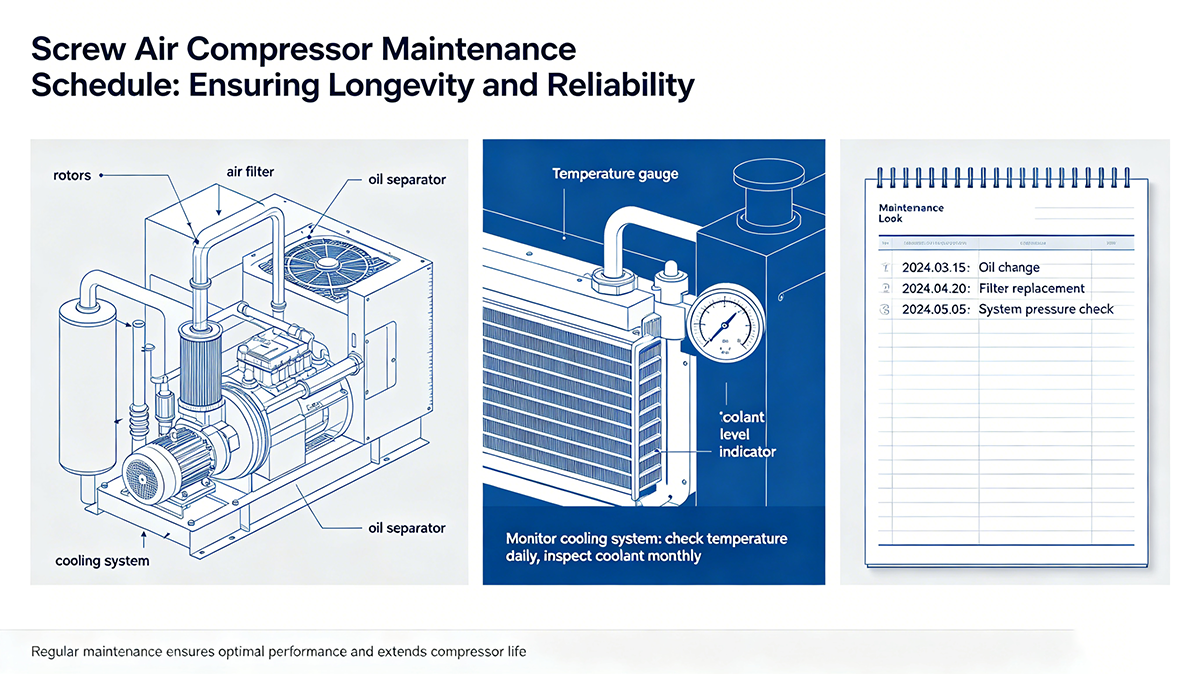
A well-structured maintenance schedule for your screw air compressor is essential for optimal performance and longevity. By adhering to a comprehensive maintenance plan, you can significantly enhance the operational lifespan of your equipment, potentially allowing it to function for an additional three years without any malfunctions.
The first step in establishing a maintenance schedule is to understand the key components of your screw air compressor. Regular inspections should include checking the oil levels, air filters, and belts. Oil changes should be performed according to the manufacturer’s recommendations, typically every 1,000 to 2,000 operating hours. Clean oil is crucial for reducing wear and tear on internal components, ensuring smooth operation.
Air filters play a vital role in maintaining air quality and efficiency. Clogged filters can lead to increased energy consumption and reduced performance. It is advisable to inspect and replace air filters every 500 hours or as needed, depending on the operating environment. Additionally, belts should be checked for wear and tension regularly, with replacements made as necessary to prevent unexpected breakdowns.
Another critical aspect of the maintenance schedule is monitoring the cooling system. Overheating can lead to severe damage, so it’s essential to clean the cooling fins and ensure that the coolant levels are adequate. Regularly checking for leaks and ensuring proper airflow will help maintain optimal operating temperatures.
Lastly, keeping a detailed log of all maintenance activities is crucial. This not only helps in tracking the performance of the compressor but also assists in identifying any recurring issues that may need addressing.
In conclusion, following a diligent screw air compressor maintenance schedule is key to ensuring the equipment operates efficiently and reliably. By committing to this schedule, you can expect your compressor to serve you well for an additional three years, free from malfunctions and costly repairs.