
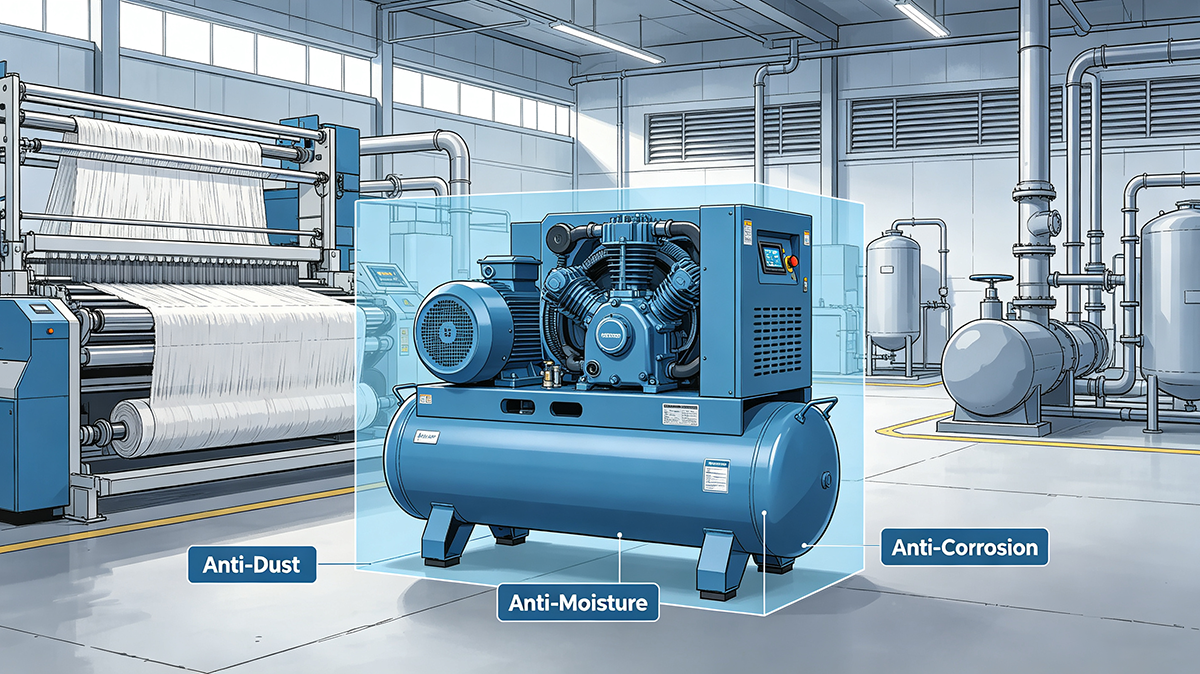
Screw air compressors are essential in the textile and chemical industries, providing reliable and efficient compressed air for various applications. However, to ensure optimal performance and longevity, proper maintenance is crucial. This article outlines key maintenance tips focusing on anti-dust, anti-moisture, and anti-corrosion strategies.
Anti-Dust Measures
Dust and particulate matter can significantly affect the performance of screw air compressors. Regularly inspect and clean air intake filters to prevent dust accumulation. Implementing a pre-filter system can also help capture larger particles before they enter the compressor. Additionally, maintaining a clean working environment around the compressor will minimize dust exposure, ensuring that the air quality remains high and the compressor operates efficiently.
Anti-Moisture Strategies
Moisture is another critical factor that can lead to compressor inefficiency and damage. To combat moisture, it is essential to install moisture separators and dryers in the compressed air system. Regularly draining condensate from the air receiver tank and ensuring that all piping is properly insulated will help prevent moisture buildup. Monitoring humidity levels in the environment can also aid in maintaining optimal conditions for the compressor’s operation.
Anti-Corrosion Techniques
Corrosion can severely impact the lifespan of screw air compressors, especially in chemical industries where corrosive substances are prevalent. To protect against corrosion, consider using corrosion-resistant materials for piping and components. Regularly inspect and maintain the compressor’s exterior, applying protective coatings where necessary. Additionally, ensure that any leaks are promptly addressed to prevent corrosive substances from coming into contact with the compressor.
In conclusion, maintaining screw air compressors in the textile and chemical industries requires a proactive approach to dust, moisture, and corrosion management. By implementing these tips, operators can enhance the reliability and efficiency of their compressors, ultimately leading to improved productivity and reduced operational costs.