
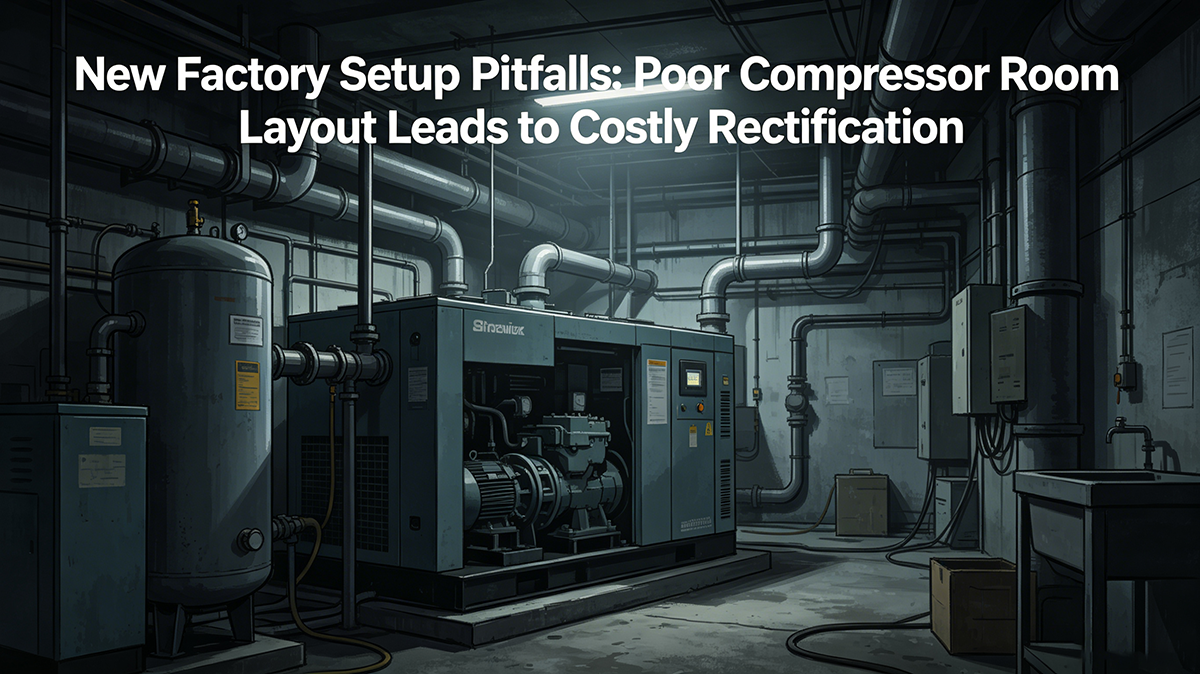
Setting up a new factory is an exciting venture, but it comes with its own set of challenges. One of the most critical aspects that can significantly impact operational efficiency and costs is the layout of the compressor room. A poorly designed compressor room layout can lead to a myriad of issues, ultimately resulting in costly rectification efforts.
The compressor room is the heart of any manufacturing facility, providing the necessary compressed air for various processes. If the layout is not well thought out, it can lead to inefficiencies such as increased energy consumption, higher maintenance costs, and even safety hazards. For instance, if compressors are placed too far from the point of use, the energy lost in transmission can be substantial. Additionally, cramped spaces can make routine maintenance difficult, leading to prolonged downtimes and unexpected repair costs.
Moreover, a poor layout can hinder airflow and cooling, which are essential for the optimal performance of compressors. Overheating can lead to equipment failure, necessitating expensive repairs or replacements. Furthermore, if the layout does not comply with safety regulations, it can result in fines and additional costs associated with redesigning the space.
To avoid these pitfalls, it is crucial to invest time in planning the compressor room layout during the factory setup phase. Engaging with experienced engineers and utilizing advanced design software can help create an efficient layout that maximizes space, ensures proper airflow, and facilitates easy access for maintenance.
In conclusion, while the excitement of setting up a new factory can be overwhelming, neglecting the importance of a well-designed compressor room layout can lead to significant financial repercussions. By prioritizing this aspect, manufacturers can save on rectification costs and ensure smooth operations from the outset.