
How to calculate the precise CFM value required for industrial screw air compressors?
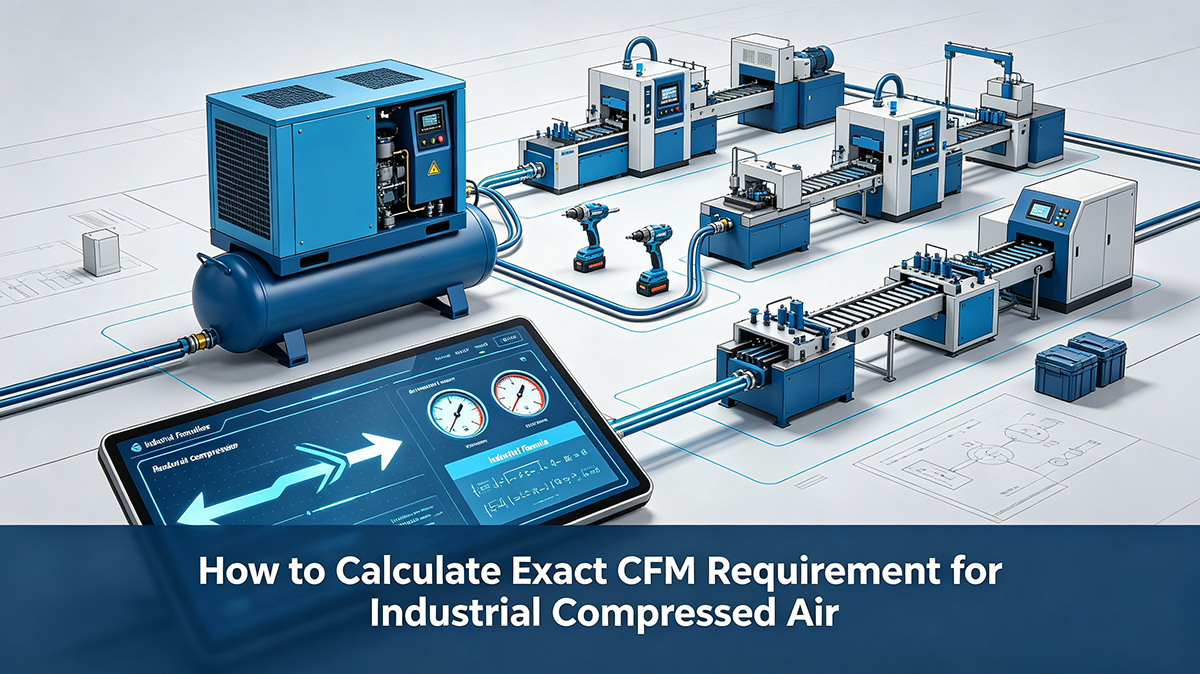 Iindustrial applications, understanding the precise CFM (cubic feet per minute) required for compressed air is crucial for optimizing efficiency and performance. Screw air compressors are widely used across various industries due to their reliability and ability to provide a continuous supply of compressed air. Here’s how to calculate the precise CFM value needed for your industrial compressed air requirements.
Step 1: Confirm your tools and equipment
First, list all the tools and equipment that will use compressed air. Each tool has a specific CFM (cubic feet per minute) requirement, usually specified in the manufacturer’s specifications. Common tools include pneumatic drills, sanders, and spray guns, each with varying air consumption.
Step 2: Calculate the total air volume requirement
Once you have obtained the CFM rating for each tool, add them together to determine the total CFM requirement. Be sure to consider the scenario where tools are used simultaneously; if multiple tools are used concurrently, ensure that their total CFM requirement is calculated.
Step 3: Consider the duty cycle
Duty cycle refers to the ratio of a tool’s usage time to its idle time. For example, if a tool is used for 50% of its time, its required CFM (cubic feet per minute) flow rate can be adjusted accordingly. This adjustment helps in accurately selecting the specifications of a screw air compressor.
Step 4: Increase the safety margin
To ensure your system can handle peak demand, it’s wise to add a safety margin to your total airflow (CFM) calculations—typically around 20% to 30%. This buffer allows for unexpected demand increases and ensures your screw air compressor operates efficiently, avoiding overload.
In conclusion
By following these steps, you can accurately calculate the CFM (Compressed Air Frequency) requirements of your industrial compressed air system. Selecting the appropriate screw air compressor based on the calculation results can improve production efficiency, reduce operating costs, and ensure the smooth operation of your industrial processes.