
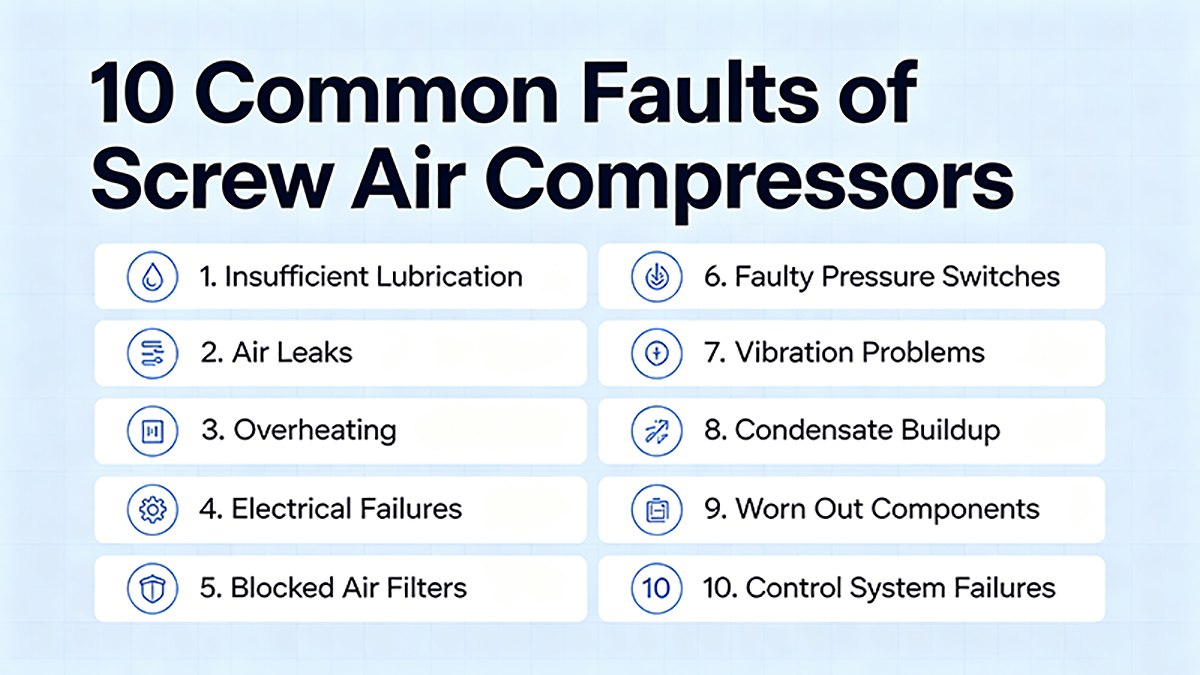
Screw air compressors are essential machines in various industries, providing a reliable source of compressed air for numerous applications. However, like any mechanical equipment, they can experience faults that may hinder their performance and efficiency. Understanding these common faults can help operators maintain their compressors effectively and avoid costly downtime. Here, we summarize the ten most common faults of screw air compressors.
1. Insufficient Lubrication
One of the most prevalent issues in screw air compressors is insufficient lubrication. This can lead to increased friction between moving parts, resulting in overheating and premature wear. Regularly checking and changing the oil, as well as ensuring the oil level is adequate, is crucial for optimal performance.
2. Air Leaks
Air leaks can significantly reduce the efficiency of a screw air compressor. They can occur in various parts of the system, including hoses, fittings, and valves. Identifying and repairing these leaks promptly is essential to maintain pressure levels and reduce energy consumption.
3. Overheating
Overheating is a common fault that can arise from several factors, including inadequate cooling, excessive load, or low lubrication levels. When a compressor overheats, it can lead to severe damage. Ensuring proper ventilation and regular maintenance can help prevent this issue.
4. Electrical Failures
Electrical issues, such as faulty wiring or blown fuses, can cause a screw air compressor to malfunction. Regular inspections of electrical components and connections can help identify potential problems before they lead to a complete breakdown.
5. Blocked Air Filters
Air filters play a crucial role in maintaining the quality of the compressed air produced by the compressor. When filters become clogged with dust and debris, they can restrict airflow, leading to reduced efficiency and increased energy consumption. Regular cleaning or replacement of air filters is necessary to ensure optimal performance.
6. Faulty Pressure Switches
Pressure switches are responsible for regulating the compressor’s operation based on the pressure levels in the system. If these switches malfunction, they can cause the compressor to operate erratically or not at all. Regular testing and calibration of pressure switches can help prevent this issue.
7. Vibration Problems
Excessive vibration can indicate underlying issues, such as misalignment or imbalance in the compressor’s components. This can lead to further mechanical problems if not addressed. Regular maintenance and alignment checks can help mitigate vibration-related issues.
8. Condensate Buildup
Condensate buildup in the air receiver tank can lead to corrosion and damage to the compressor. It is essential to regularly drain the tank to remove any accumulated moisture and prevent long-term damage.
9. Worn Out Components
Over time, various components of a screw air compressor, such as bearings, rotors, and seals, can wear out due to continuous operation. Regular inspections and timely replacements of worn parts are crucial to maintaining the compressor’s efficiency and longevity.
10. Control System Failures
Modern screw air compressors often come equipped with sophisticated control systems that manage their operation. Failures in these systems can lead to operational inefficiencies or complete shutdowns. Regular software updates and system checks can help ensure the control system functions correctly.
Conclusion
Understanding the ten common faults of screw air compressors is vital for operators and maintenance personnel. By being aware of these issues and implementing regular maintenance practices, businesses can enhance the reliability and efficiency of their compressors, ultimately leading to improved productivity and reduced operational costs. Regular training and awareness programs can further empower staff to identify and address these faults proactively, ensuring the longevity of their equipment.