
When it comes to selecting a screw air compressor, many buyers often get lost in the sea of technical specifications and parameter lists. However, the true quality of a screw air compressor can be better assessed by focusing on three core components: the airend, the drive system, and the cooling system.
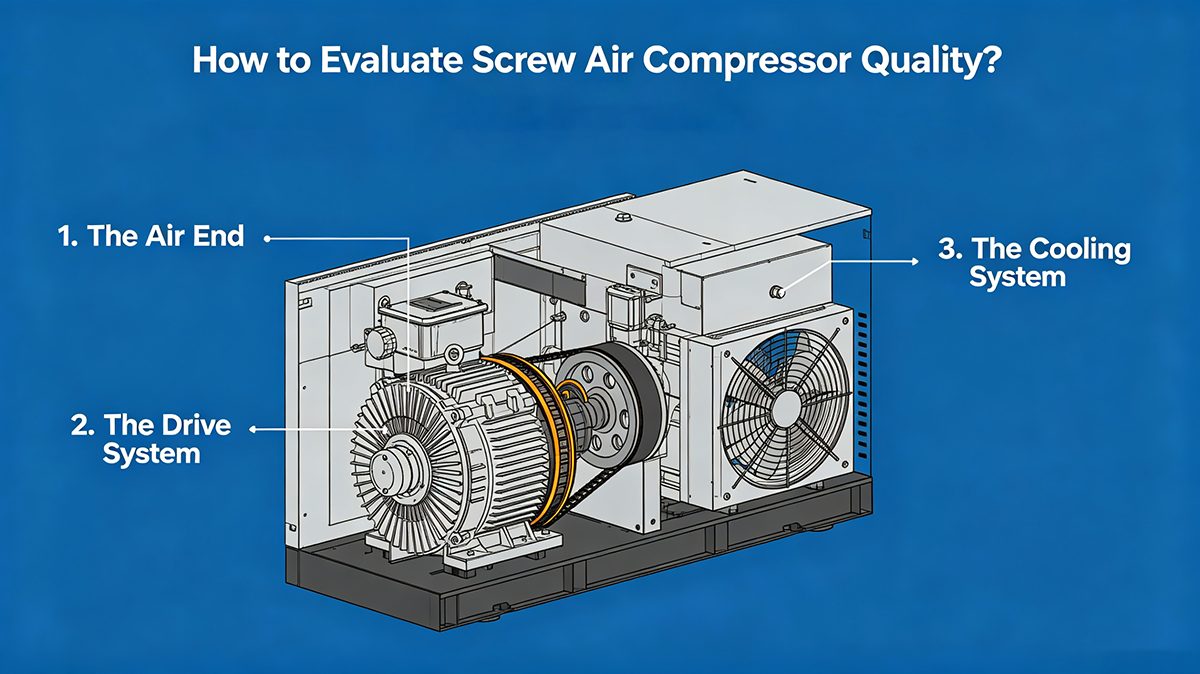
1. The Airend: The Heart of the Compressor
The airend is arguably the most critical component of a screw air compressor. It is responsible for compressing the air and directly impacts the efficiency and performance of the unit. When evaluating the airend, look for high-quality rotors made from durable materials, as well as precision engineering that ensures minimal leakage and maximum output. A well-designed airend will not only enhance the compressor’s efficiency but also extend its lifespan.
2. The Drive System: Efficiency and Reliability
The drive system connects the motor to the airend and plays a vital role in the overall efficiency of the compressor. A reliable drive system, whether it’s a direct drive or a belt-driven setup, should minimize energy loss and provide consistent performance. When assessing the drive system, consider the motor’s power rating and efficiency, as well as the type of drive mechanism used. A high-quality drive system will ensure that the compressor operates smoothly and reliably under varying load conditions.
3. The Cooling System: Maintaining Optimal Performance
The cooling system is essential for maintaining the operational temperature of the screw air compressor. An effective cooling system prevents overheating, which can lead to premature wear and failure. Look for compressors with advanced cooling technologies, such as oil coolers or aftercoolers, that can efficiently dissipate heat. A well-designed cooling system will not only enhance the compressor’s performance but also improve energy efficiency.
In conclusion, while parameter lists can provide some insights into a screw air compressor’s capabilities, focusing on the airend, drive system, and cooling system will give you a clearer picture of its quality and reliability. By prioritizing these core components, you can make a more informed decision and invest in a compressor that meets your operational needs.